

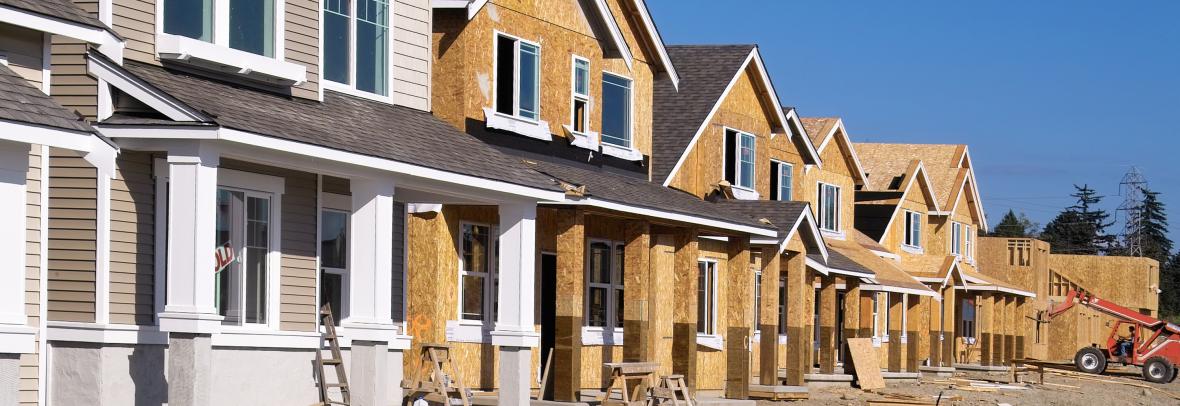
First, let’s define new construction home types
Semi-custom: You choose a floor plan and add selected upgrades. Typical: 6-12 months. More decision points = more time.
Custom homes: Fully bespoke design. Expect 18+ months depending on complexity, permits, and site work.
New Construction Home Overview
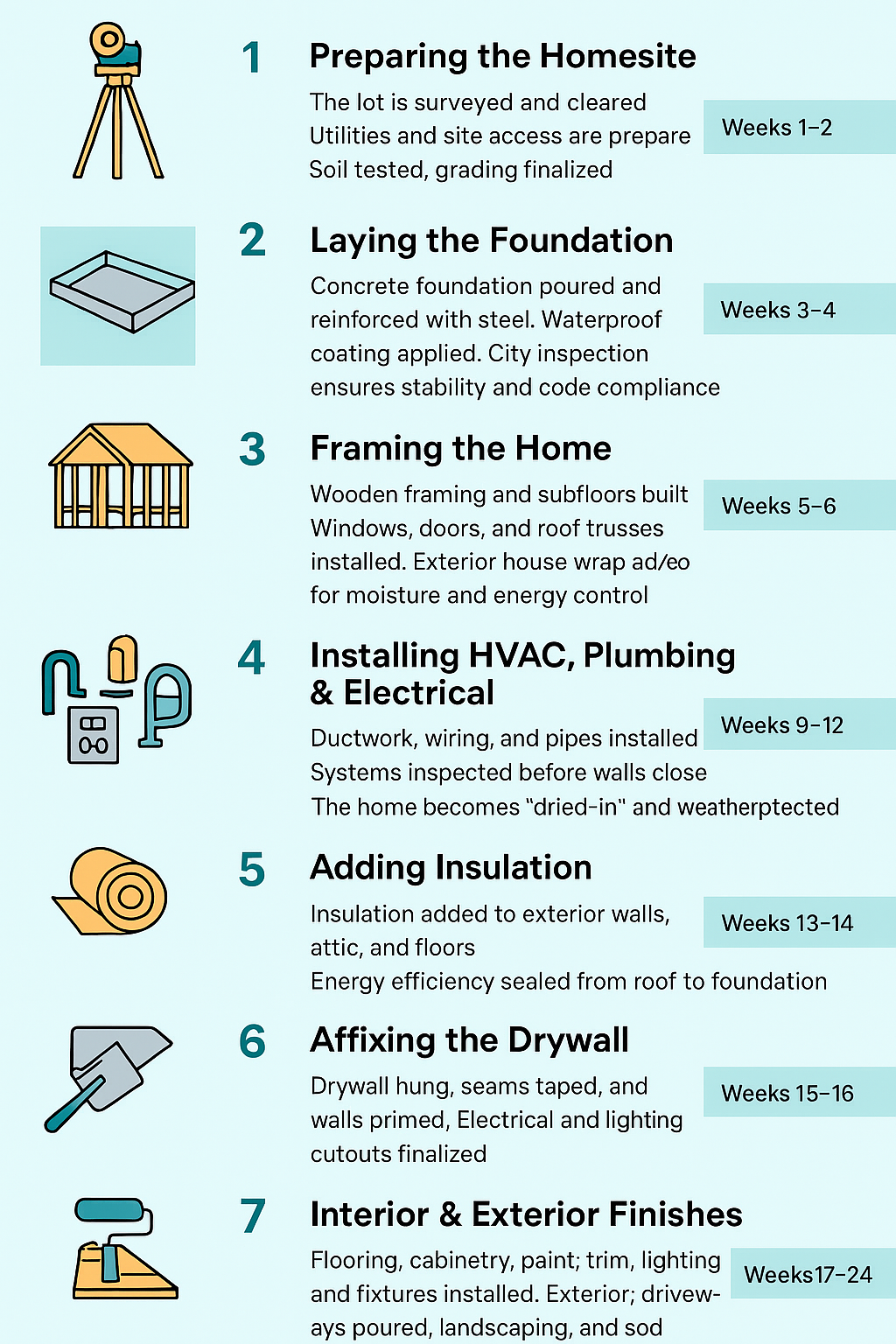
Let’s first start with an overview of the stages of new home construction and the estimated timeline for each stage.
Builders will often refer to the stage of the home construction. A home in later stages might be referred to as a ‘quick move-in’ meaning completion could happen within the next six weeks. It’s important to note that the further along a home is in the construction stages, the less control you’ll likely have over final finishes such as cabinets, flooring, fixtures, and paint.
Review the following timeline for an overview, but remember that there are many considerations such as: materials, location, or weather that will affect your timeline.
Timeline Overview
Step 1: Exploring New Construction
You’re looking into new construction as an option for your home purchase, how exciting! Take a moment to consider each of the following:
Model Home Tours: Model homes are not only staged but are often upgraded with custom carpentry, more expensive fixtures, and window treatments that don’t come standard. Be sure you’re clear about what’s included versus what’s considered an upgrade. Don’t assume that if you saw it in the model home, it will be included in yours!
Floor plan / Elevation Selection: Builders often offer the same floor plan with multiple elevations. (No, elevations aren’t the height above sea level, they refer to the home’s exterior design.) For example, a floor plan might have three elevation options to ensure homes don’t look identical, even if layouts are similar. When choosing an elevation, note that it may change aspects such as window placement, gables, trim, and materials.
Lot Selection: Not all lots are created equal! Factors that affect lot pricing include waterfront views, rear privacy, proximity to busy streets, or home type (bungalow, single-family, or townhome). Be sure you receive a total price from the builder that includes the lot premium. If you love a particular floor plan, you may find it available on different lots within the same community, with price variations accordingly.
Completion Timeline: Depending on the development stage, some homes may be a “quick move-in” (ready soon or even immediately), while others could be 6+ months from completion. While timelines aren’t concrete (Mother Nature has her say), builders do their best to estimate completion dates. They often aim to finish homes by milestone dates such as the end of a month, quarter, or fiscal year, which can sometimes be used to your negotiation advantage.
Once you’ve chosen your lot, floor plan, and elevation, it’s time to discuss final pricing, incentives, and loan approval.
How Can a Realtor® Help? You may not be experienced in new home construction, but we are! Realtors® know the right questions to ask and can help guide you through a smooth experience. Builders appreciate working with buyers who have Realtor® representation because it shows you’re serious, qualified, and working with a professional.
Step 2: Securing the Contract
It’s time to secure the contract and ensure you understand every detail before signing on the dotted line. Ask these important questions before committing:
What appliances are included?
Many builders include the washer, dryer, and refrigerator, but not all! Never assume.
What’s the HOA cost, and what’s included? (Bonus: Is there a CDD?)
Homeowner Associations (HOAs) manage the community’s operations, amenities, and sometimes events. Some include pools, gyms, and sports courts, while others may offer only a playground and dog park. Some include lawn care or internet. Decide what’s most important to you and whether you’re comfortable paying $30-$500 per month.
What warranties are included?
No home is perfect, even a new one. Builders often provide a “1-2-10” warranty:
- 1 year: Workmanship and materials (cosmetic items like drywall or trim)
- 2 years: Systems (electrical, plumbing, HVAC)
- 10 years: Major structural defects (foundation, framing, load-bearing walls)
Understand the warranty claims process before you need it.
Important Tip: Most HOAs charge a capital contribution fee at closing, typically $500-$3,000. It’s a one-time fee, but you’ll want to know about it so it’s not a surprise at closing!
Builder Incentives:
Builders frequently offer flex cash, interest rate buy-downs, design center credits, or closing cost coverage.
Lender Choice: To receive most incentives, you must use the builder’s preferred lender. You can use your own lender, but you’ll likely forfeit those perks.
Builders prefer offering incentives over lowering home prices, as this helps maintain neighborhood values. While base price negotiation is limited, you can often request added value, like including appliances or extra flex cash instead of a lower sales price.
Loan Approval:
Whether you use the preferred lender or not, you’ll need pre-approval before your contract is accepted.
How Can a Realtor® Help? We represent you, not the builder–at no cost to you. Having an experienced Realtor® ensures your interests are protected during negotiations and contract review.
Bonus Tip: What is a CDD?
A Community Development District adds taxes to fund community infrastructure like roads, lighting, and drainage. These are paid with your property taxes but can affect your overall costs.
Step 3: Understand the Details
Earnest Money: Expect a deposit ranging from $5,000-$50,000 depending on the builder, home price, and stage.
Contingencies: These are conditions that allow you to exit a contract. For example, a home sale contingency ensures your current home must sell before closing on your new one.
Backing Out:
Generally, there are few ways to exit a builder contract. If your financing falls through, you can typically cancel and receive your earnest money back. Other valid reasons must be written into the contract (like the home sale contingency). Changing your mind or choosing another community usually won’t qualify. Sometimes builders allow you to transfer your deposit to another home within the same community, but confirm this before signing.
Step 4: Your Home Is Being Built!
You can go visit your home during the build process. But if you’re from out-of-town, your Realtor® can visit your homesite and take pictures for you! We don’t want you to feel in the dark on your new home purchase.
Step 5: Inspections
If possible, choose to pay for your own third party pre-drywall inspection. This gives you a disinterested opinion on the state of the build quality. Pre-drywall is a good time because drywall covers up the ‘insides’ of the house that you might want inspected.
Step 6: Final Walkthrough & Closing
Builders are usually strict with closing dates. Once a home is complete, they aim to close quickly.
Before closing (typically 1-2 days prior), you’ll conduct a final walkthrough. This is your chance to note any issues before signing. Use blue painter’s tape to mark paint drips, door misalignments, missing gaskets, or mechanical issues. Be thorough, but remember that you’ll still have warranty coverage if something is missed.
Once everything checks out, you’ll approve the home for closing!
Be sure to transfer utilities into your name before move-in to avoid service interruptions. At closing, you’ll sign the final paperwork and take ownership of your brand-new home. Congratulations!
Final Walkthrough Checklist
- Doors and windows operate properly, locks and screens in place
- Floors and finishes free from scratches or damage
- HVAC system tested with filters installed
- Appliance installations verified
- Exterior grading, driveway, sidewalks, and landscaping completed
Hidden Builder Costs to Watch For
Even when you know the base price, extra costs can sneak up on you. Here’s what to budget for:
Interior Costs:
- Blinds or window treatments
- Ceiling fans and light fixtures
- Refrigerator, washer, and dryer
- Garage door opener
- Upgraded flooring (LVP/tile vs. carpet)
- Extra outlets or recessed lighting
Exterior & Community Costs:
- Landscaping or irrigation upgrades
- Fencing or screened lanai
- Mailbox, gutters, or exterior lights
- HOA and CDD fees
- Appliance delivery or hookup fees
Financial & Timing Surprises:
- Lot premiums for better locations
- Design center markup (50-100% above retail)
- Closing cost requirements tied to lender choice
- Interest rate lock extensions for delays
Add 5-10% to your total budget for these hidden costs to stay prepared.
New Construction Process Checklist
- Get pre-approved by at least two lenders
- Check builder references and recent closings
- Obtain written base inclusions and upgrade list
- Have your Realtor® or attorney review the contract
- Schedule an independent pre-drywall inspection
- Request elevation certificate and confirm flood zone
- Keep a 5-10% contingency fund for hidden costs
- Get all warranty terms in writing
- Submit your punch list within the warranty period
Whether buying a new construction or an existing home, a trusted Realtor® can save you time, money, & frustration. Contact me today to discuss your home buying needs!